
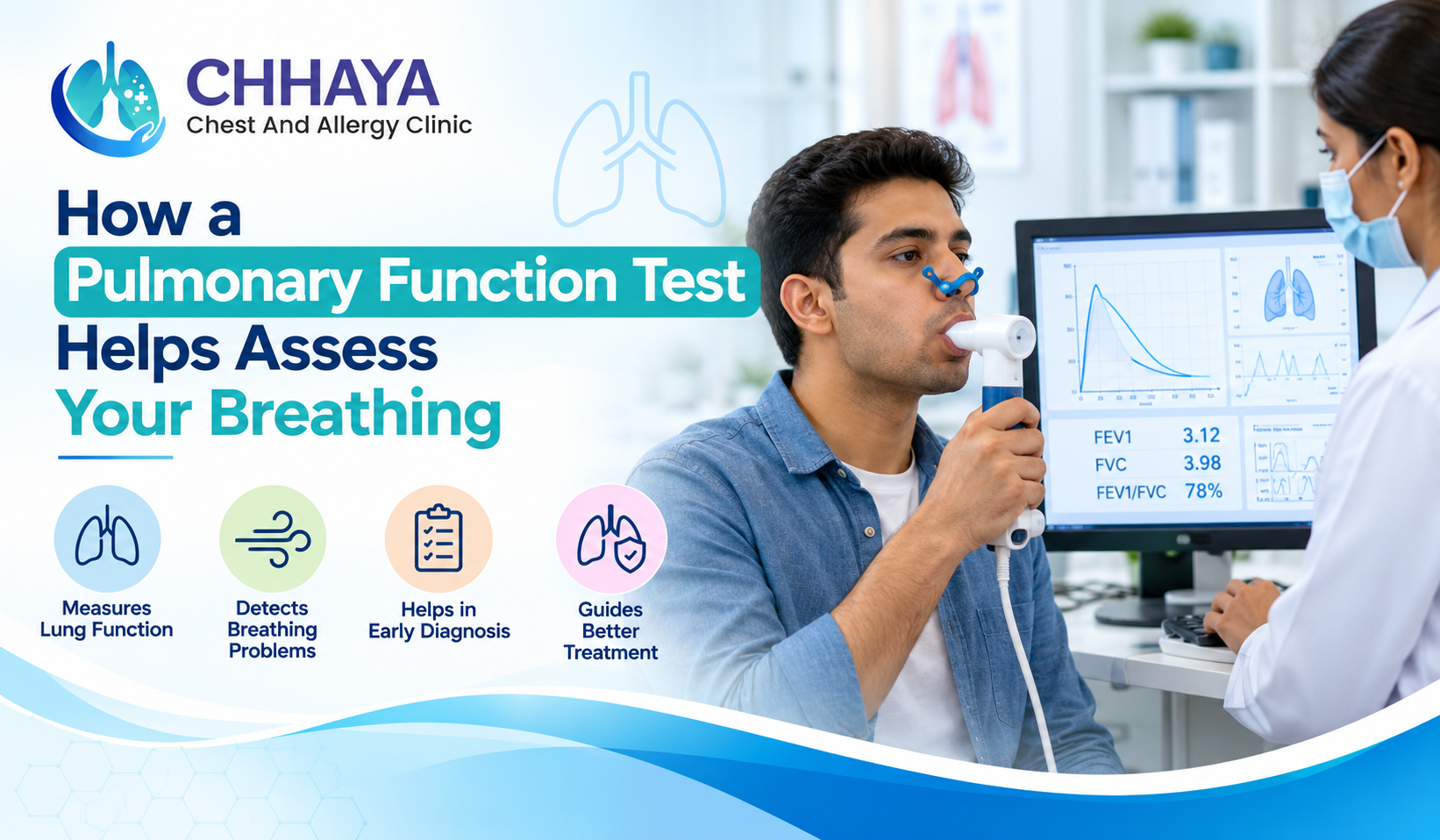
Breathing comfortably is something most people take for granted until climbing stairs, walking briskly, or performing everyday tasks becomes unexpectedly difficult. Persistent coughing, wheezing, and unexplained breathlessness can sometimes indicate changes in how the lungs function. A pulmonary function test in ahmedabad may help investigate these symptoms by measuring how effectively air moves into and out of the lungs. At Dr. Harshil Pandya’s respiratory care practice, patients can seek evaluation for breathing concerns and guidance on appropriate diagnostic investigations.
1. What Lung Function Testing Can Tell You
Lung function tests are a group of investigations that assess different aspects of breathing. They help doctors understand whether the lungs are moving air normally, transferring oxygen effectively, or showing patterns associated with certain respiratory conditions.
One commonly used investigation is spirometry. During this test, a patient breathes through a mouthpiece connected to a measuring device. The equipment records how much air the person exhales and how quickly it leaves the lungs.
Depending on the clinical situation, testing may help investigate:
- Asthma and suspected narrowing of the airways
- Chronic obstructive pulmonary disease (COPD)
- Breathlessness without an obvious explanation
- Respiratory symptoms that persist after an infection
- Changes in lung function during ongoing treatment
These tests do not diagnose every lung condition independently. Doctors interpret the measurements alongside symptoms, physical examination findings, medical history, and other investigations when needed.
2. When Should You Consider a Breathing Assessment?
A doctor may recommend a pft test in ahmedabad when symptoms suggest that the lungs or airways need closer evaluation. The decision depends on the pattern of symptoms, their duration, and the person’s medical history.
For example, someone who experiences recurring wheezing at night may need assessment for asthma. Another person who becomes breathless during ordinary activity may require testing to investigate airflow limitation or other possible causes.
Testing may also be useful when:
- A respiratory condition needs an initial assessment.
- Symptoms continue despite prescribed treatment.
- A doctor needs to monitor changes in an established condition.
- Occupational exposure to dust or chemical irritants raises concerns.
- Results may help determine whether further investigations are appropriate.
Not everyone with a cough requires lung function testing. A clinician first considers whether the test is suitable and whether another investigation would provide more relevant information.
3. What Happens During the Procedure?
Understanding the process can make testing feel less unfamiliar. Most routine lung function assessments are non-invasive, although the exact procedure varies according to the measurements required.
For spirometry, the patient usually sits upright, wears a nose clip if instructed, and seals their lips around a mouthpiece. They then take a deep breath and blow out as forcefully and completely as possible. The technician may ask them to repeat the manoeuvre to obtain reliable measurements.
Some assessments involve additional steps. For instance, a doctor may request measurements before and after administering a bronchodilator, a medicine that relaxes airway muscles. Comparing the results can help evaluate whether airflow improves after treatment.
| Measurement | What it indicates |
| Forced vital capacity (FVC) | Total air exhaled forcefully after a full breath |
| Forced expiratory volume in one second (FEV1) | Air exhaled during the first second of a forced breath |
| FEV1/FVC ratio | Relationship between early airflow and total forced exhalation |
| Lung volumes | Amount of air the lungs can hold, including air remaining after exhalation |
| Diffusing capacity | How effectively certain gases pass from the lungs into the blood |
Not every appointment includes all these measurements. The selected tests depend on the clinical question being investigated.
4. Finding the Right Testing Facility
When searching online for pft testing near me, consider more than distance or appointment availability. Reliable results depend on appropriate equipment, trained staff, consistent testing technique, and interpretation by a qualified healthcare professional.
Before attending, confirm whether the facility performs the specific test your doctor has requested. Ask whether you need to avoid smoking, strenuous exercise, or particular medicines beforehand. Do not stop prescribed medication unless your clinician gives you specific instructions.
Bring relevant medical records, previous test reports, and a list of current medicines. If you have recently had a respiratory infection or are experiencing a sudden worsening of symptoms, inform the clinic before the appointment.
5. Understanding Results and the Next Steps
A lung function report can contain several numbers, but a result outside the expected range does not automatically establish a diagnosis. Age, height, sex, testing technique, and other clinical factors can influence interpretation.
A reduced airflow measurement may suggest airway obstruction, while certain combinations of results may raise the possibility of restricted lung expansion. Additional testing may be needed to distinguish between these patterns and understand their cause.
After reviewing the report, a doctor may recommend treatment, monitoring, repeat testing, or further investigations. Patients should ask what the findings mean in their specific situation and whether any changes to their existing care are necessary.
Conclusion
Lung function testing provides useful information about airflow and other aspects of respiratory health, helping clinicians investigate symptoms and monitor established conditions. The most meaningful results come from combining accurate measurements with a careful clinical assessment. If persistent breathing problems require further evaluation, consulting a pulmonary specialist in ahmedabad can help you understand which investigations are appropriate and what your results may mean. Seek timely medical advice rather than ignoring symptoms that interfere with daily life.
Frequently Asked Questions
Is lung function testing painful?
Routine spirometry is generally painless. Repeated forceful breathing can cause temporary coughing or light-headedness, so tell the technician if you feel uncomfortable.
How long does the test take?
A basic spirometry appointment often takes around 15 to 30 minutes, although more comprehensive testing may take longer.
Do I need to prepare before testing?
Follow the clinic’s instructions. Depending on the test, you may receive guidance about smoking, exercise, meals, and medication use beforehand.
Can normal results rule out every lung condition?
No. Some respiratory conditions may not be evident on routine testing, so doctors consider symptoms and other findings as well.

No comment